
Asset Categories
Every asset has value. Good stewardship begins by recognising what you have.
Organisations own far more than buildings and machinery. Information, heritage, intellectual property, land, digital systems and even relationships can all represent valuable organisational assets.
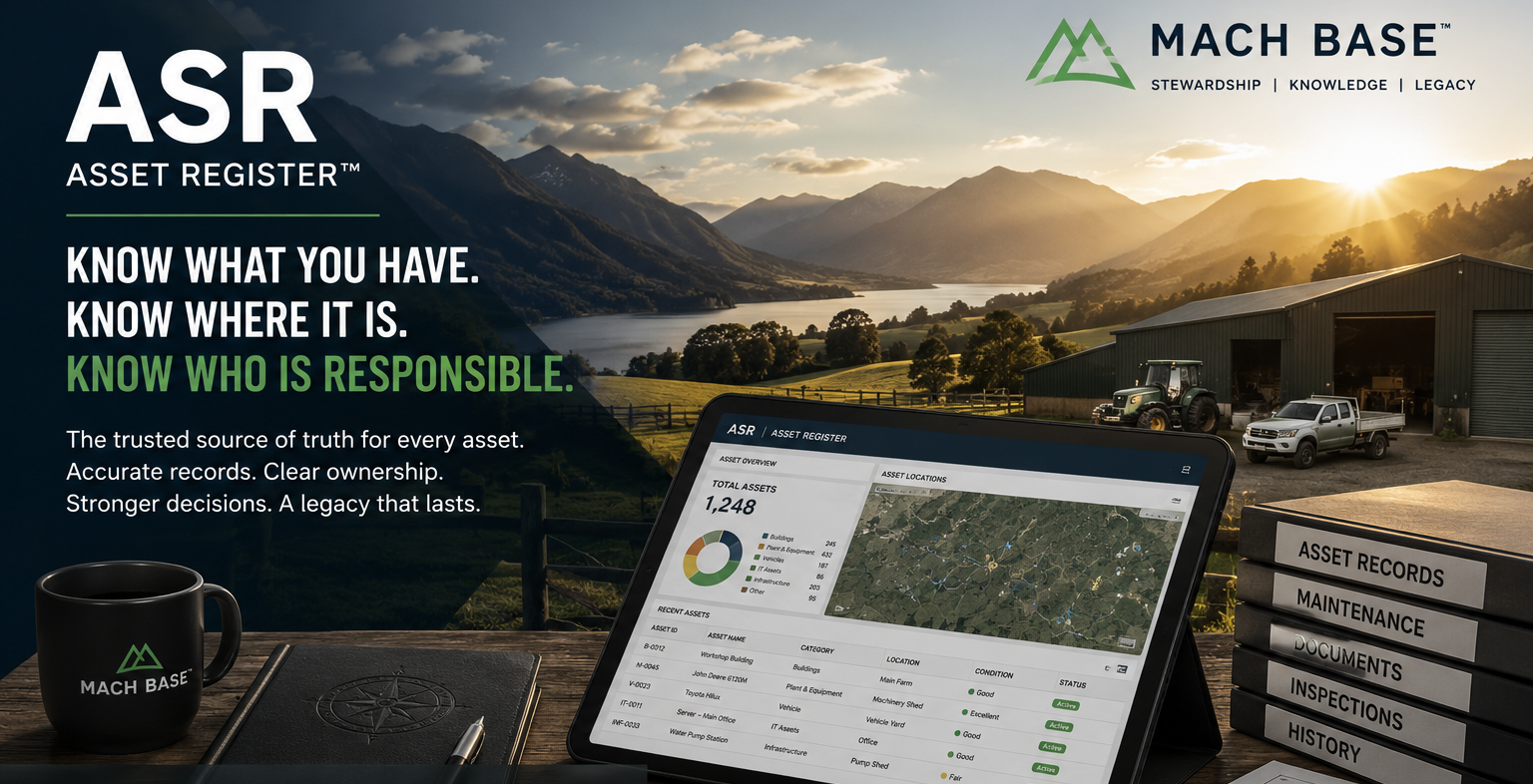
Asset Register™ groups these resources into practical categories, making them easier to organise, manage and protect.
Why Categorise Assets?
Categories provide structure. They allow similar assets to be managed consistently while making reporting, maintenance, budgeting and planning significantly easier.
Good categorisation also helps reveal gaps, duplication and opportunities that may otherwise remain hidden.
Physical Assets
Buildings, machinery, vehicles, equipment, tools, furniture and infrastructure.
Digital Assets
Websites, domains, software, databases, cloud services, photographs, documents and digital archives.
Financial Assets
Cash, investments, shares, trust funds, grants, reserves and financial instruments.
Natural Assets
Land, forests, waterways, biodiversity, coastal resources, gardens and environmental resources.
Knowledge Assets
Procedures, manuals, policies, training material, expertise and organisational know-how.
Heritage Assets
Historical documents, oral histories, photographs, collections, cultural knowledge and significant places.
No Asset Exists Alone
Most assets connect to many others.
A building contains equipment. Equipment has maintenance records. Maintenance creates financial records. Financial decisions influence future replacement. Historical records explain why those decisions were made.
Asset Register™ captures these relationships rather than treating each asset as an isolated record.
Typical Asset Groups
Simple Classification
Organisations may choose only a handful of categories, keeping the register straightforward and easy to maintain.
Detailed Classification
Larger organisations can introduce sub-categories and specialised registers while still maintaining one consistent asset framework.
Designed To Grow
Asset Register™ is intentionally scalable.
A family trust may begin with twenty assets. A council or enterprise may eventually manage hundreds of thousands of records.
The underlying principles remain exactly the same.
Building The Register
With asset categories established, the next step is recording consistent information for every individual asset.
Next: Asset Records →