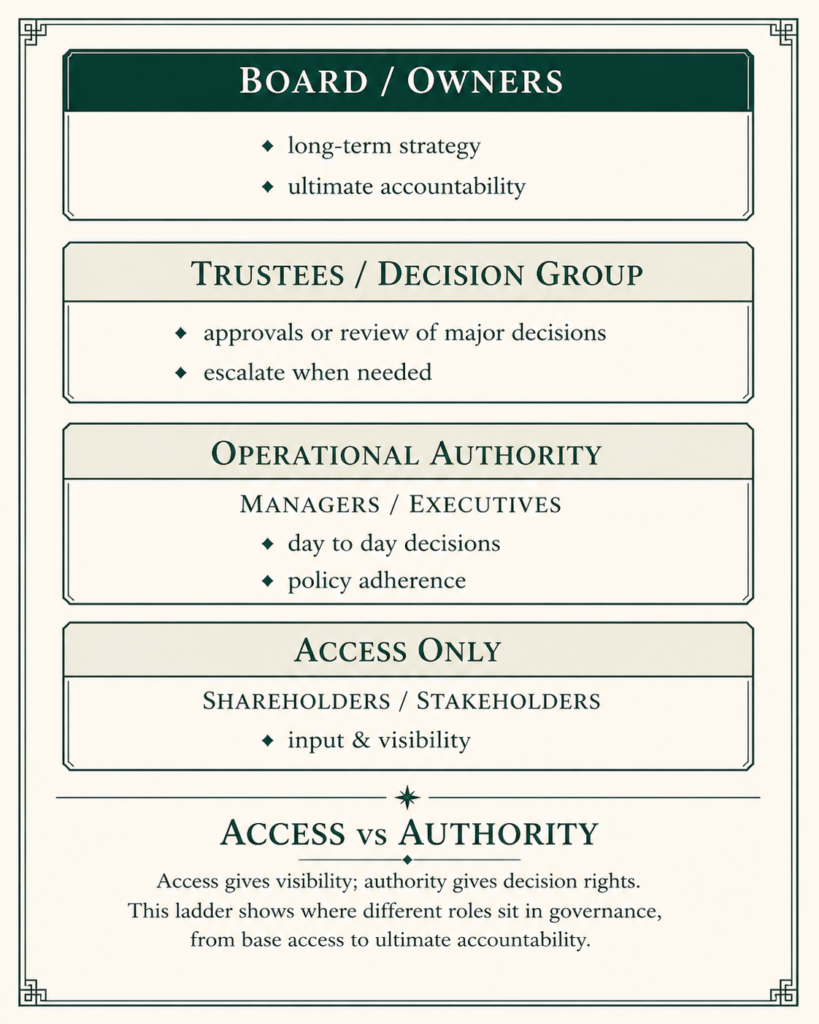
Access & Authority Boundaries
Ngā Rohe Uru me te Mana Whakahaere
Clear boundaries protect trust. This page explains who can see information, who can act on it, and where authority always remains.
Mā te mārama o ngā rohe ka tiakina te whakawhirinaki. Ka whakamārama tēnei whārangi ko wai ka kite i ngā kōrero, ko wai ka taea te mahi, ā, kei hea tonu te mana whakahaere.
Core rule: Visibility ≠ Authority
Ture matua: Ehara te Mārama i te Mana
Why this matters
Te take e hira ai
Governance systems fail when visibility is mistaken for decision-making power. The GOP separates access, action, and authority.
Ka hē ngā pūnaha whakahaere ina whakaarohia te mārama he mana whakatau. Ka wehe mārika te GOP i te uru, te mahi, me te mana.
Shareholder Access
Te Uru a te Kaipupuri Hea
- View high-level status only
- Submit information voluntarily
- No decision-making authority
- No direct record changes
- Kite i ngā tūnga taumata-runga anake
- Tuku kōrero ā-whakaae
- Kāore he mana whakatau
- Kāore he whakarerekē rēhita
Trustee & Board Authority
Te Mana a ngā Kaitiaki me te Poari
- Full legal authority retained
- Decisions occur outside the system
- System supports — does not decide
- All actions remain subject to law and tikanga
- Kei ngā kaitiaki tonu te mana ture
- Ka mahia ngā whakatau ki waho o te pūnaha
- Hei tautoko noa te pūnaha
- Me ū ngā mahi ki te ture me te tikanga
Expectation: Systems create clarity — not outcomes.
Whakarite: Ka hanga te pūnaha i te mārama — ehara i te hua.
Final authority always rests with trustees and the board.
Kei ngā kaitiaki me te poari tonu te mana whakamutunga.