Frequently Asked Questions
Common questions about assets, stewardship and continuity.
Every organisation manages assets in different ways.
The following questions regularly arise when discussing asset ownership, stewardship, records and long-term continuity.
What Is An Asset?
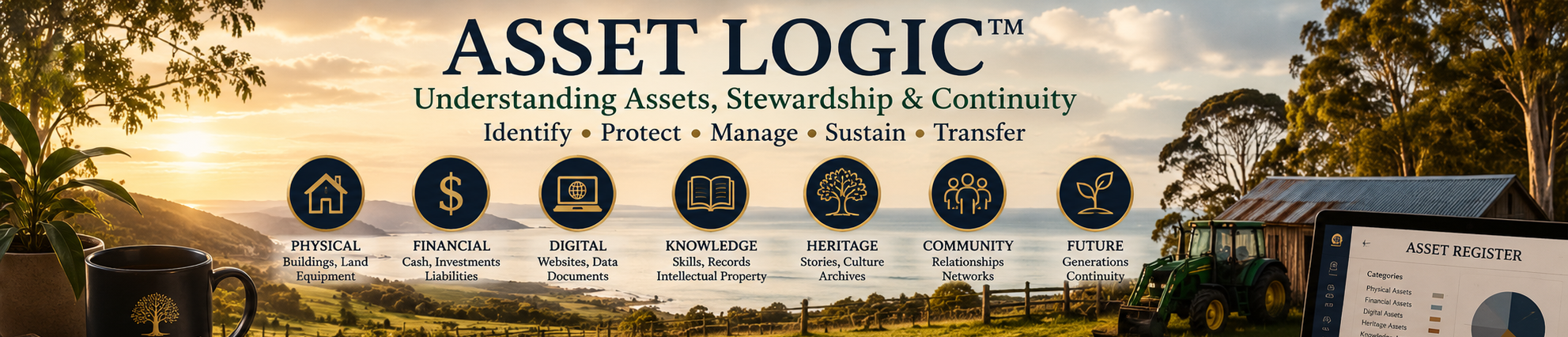
An asset is anything that provides value, capability, opportunity or future benefit.
Assets may be physical, financial, digital, cultural, historical or knowledge-based.
Do Assets Have To Be Financial?
No.
Many valuable assets cannot be measured purely in financial terms.
Knowledge, archives, photographs, stories, relationships and cultural heritage may hold significant long-term value.
What Is Asset Stewardship?
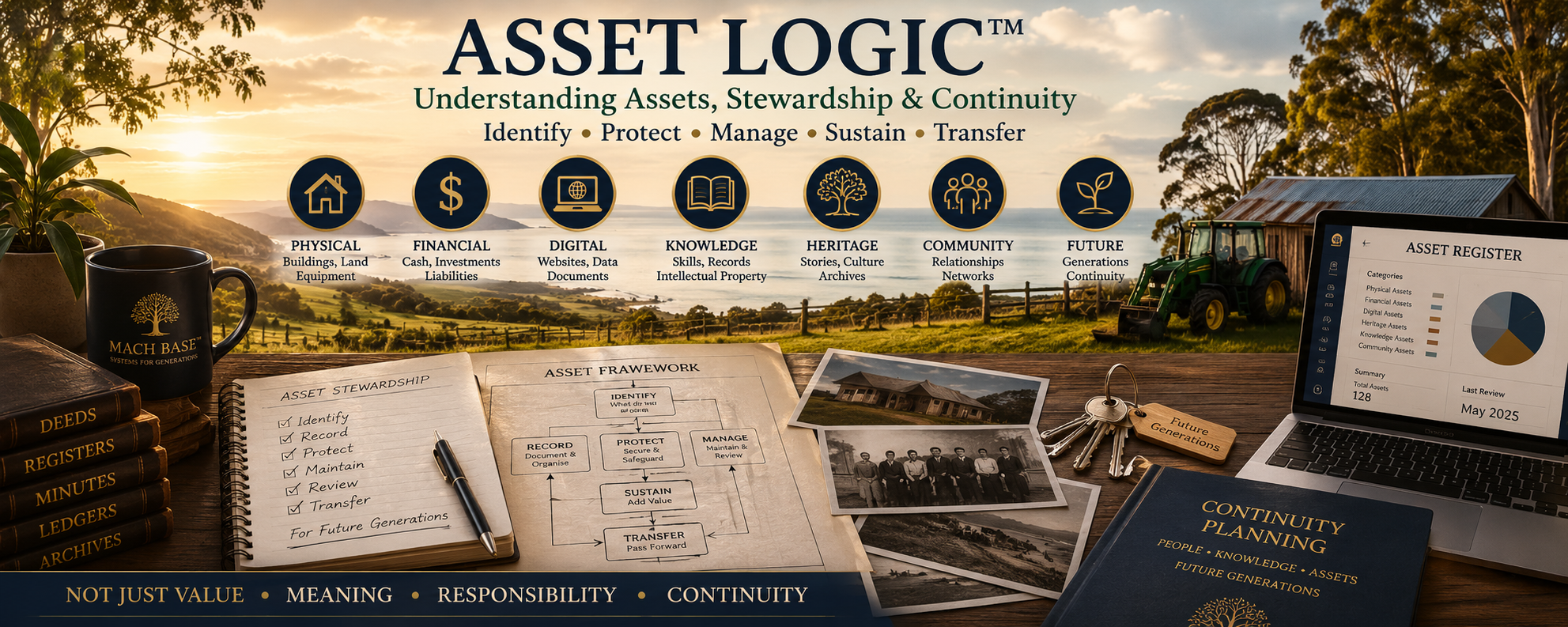
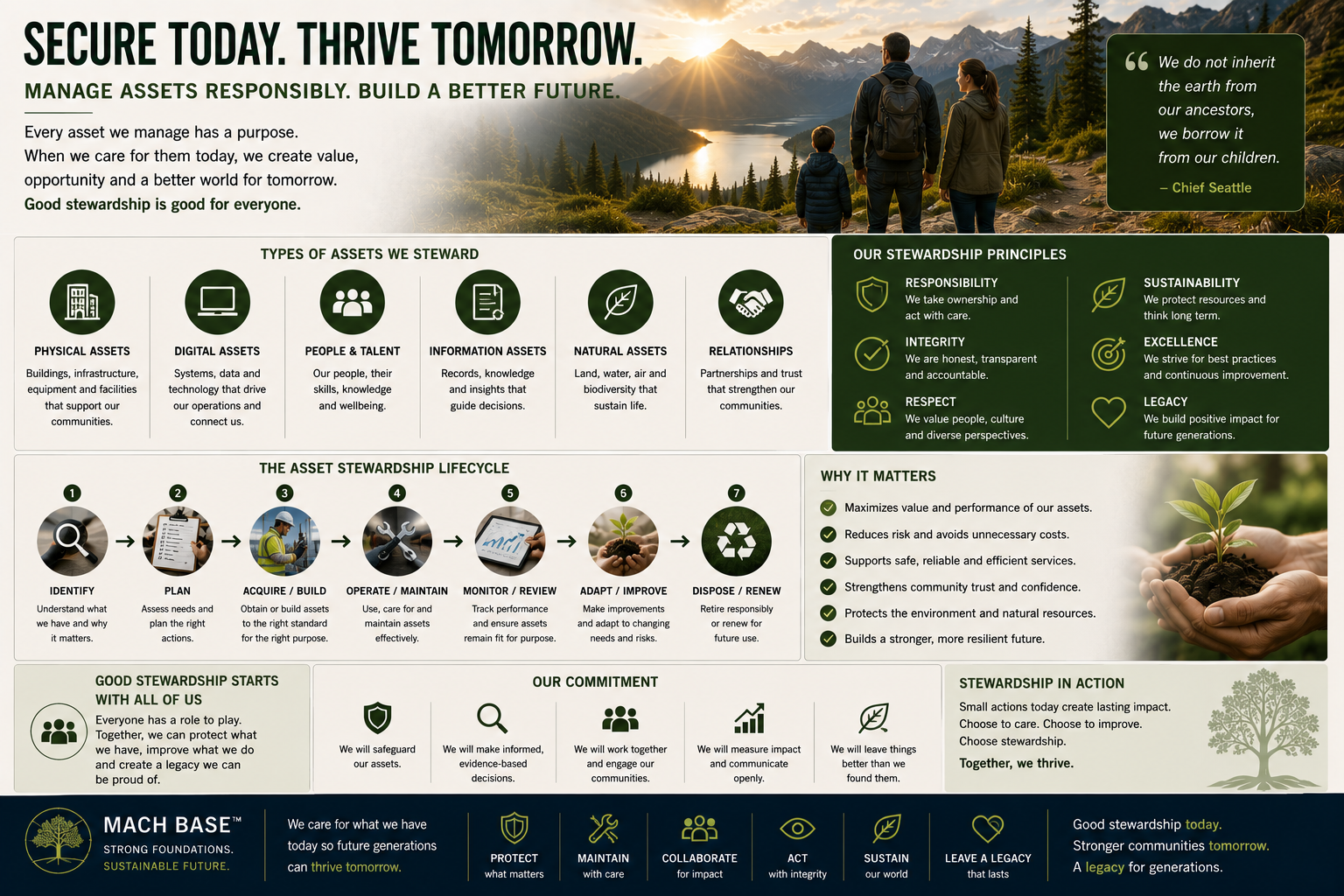
Asset stewardship is the ongoing process of protecting, maintaining, improving and passing forward assets responsibly.
Stewardship focuses on long-term sustainability rather than short-term ownership alone.
Why Are Asset Registers Important?
Asset registers help organisations understand what assets exist, where they are located, who is responsible and what actions may be required.
Registers improve visibility, accountability and continuity.
How Detailed Should Asset Records Be?
The level of detail should match the importance and complexity of the asset.
A simple register that is regularly maintained is often more useful than a complex system that nobody updates.
What Are Digital Assets?
Digital assets include websites, domains, email systems, cloud storage, databases, digital documents and online services.
Increasingly, these assets support critical organisational functions and require active stewardship.
What Are Knowledge Assets?
Knowledge assets include expertise, experience, procedures, lessons learned and organisational memory.
These assets often reside within people and can be easily lost if not documented and shared.
What Are Heritage Assets?
Heritage assets include archives, photographs, oral histories, stories, cultural records and historical documents.
They help preserve identity, context and continuity across generations.
What Is The Difference Between Ownership And Stewardship?
Ownership establishes legal rights and authority.
Stewardship focuses on responsibility, care, maintenance and continuity.
An organisation may own an asset, but stewardship determines how effectively it is managed over time.
Why Is Continuity Important?
Continuity helps ensure future custodians inherit not only assets, but also the knowledge and understanding required to manage them effectively.
Good continuity planning reduces risk and supports long-term sustainability.
Can Small Organisations Benefit From Asset Management?
Absolutely.
Small organisations often rely heavily on a small number of people and resources.
Simple registers, clear records and shared knowledge can significantly improve resilience and continuity.
Does Asset Logic™ Require Special Software?
No.
Asset Logic™ is a framework for understanding assets and stewardship.
The principles can be applied using simple registers, spreadsheets, databases, websites or more advanced management systems.
How Does Asset Logic™ Relate To MACH BASE™?
Asset Logic™ forms part of the wider MACH BASE™ ecosystem.
It complements concepts such as GOP™, Kaitiaki™, Site Logic™, TNA™, Story House™ and LEGACY™ by providing a framework for understanding assets, stewardship and continuity.
The Key Idea
Asset Logic™ is not simply about managing things.
It is about understanding what matters, recording it clearly, caring for it responsibly and preparing future custodians for what comes next.
Contact & Discussion
Every organisation has unique assets, responsibilities and stewardship challenges.
Contact Asset Logic™