
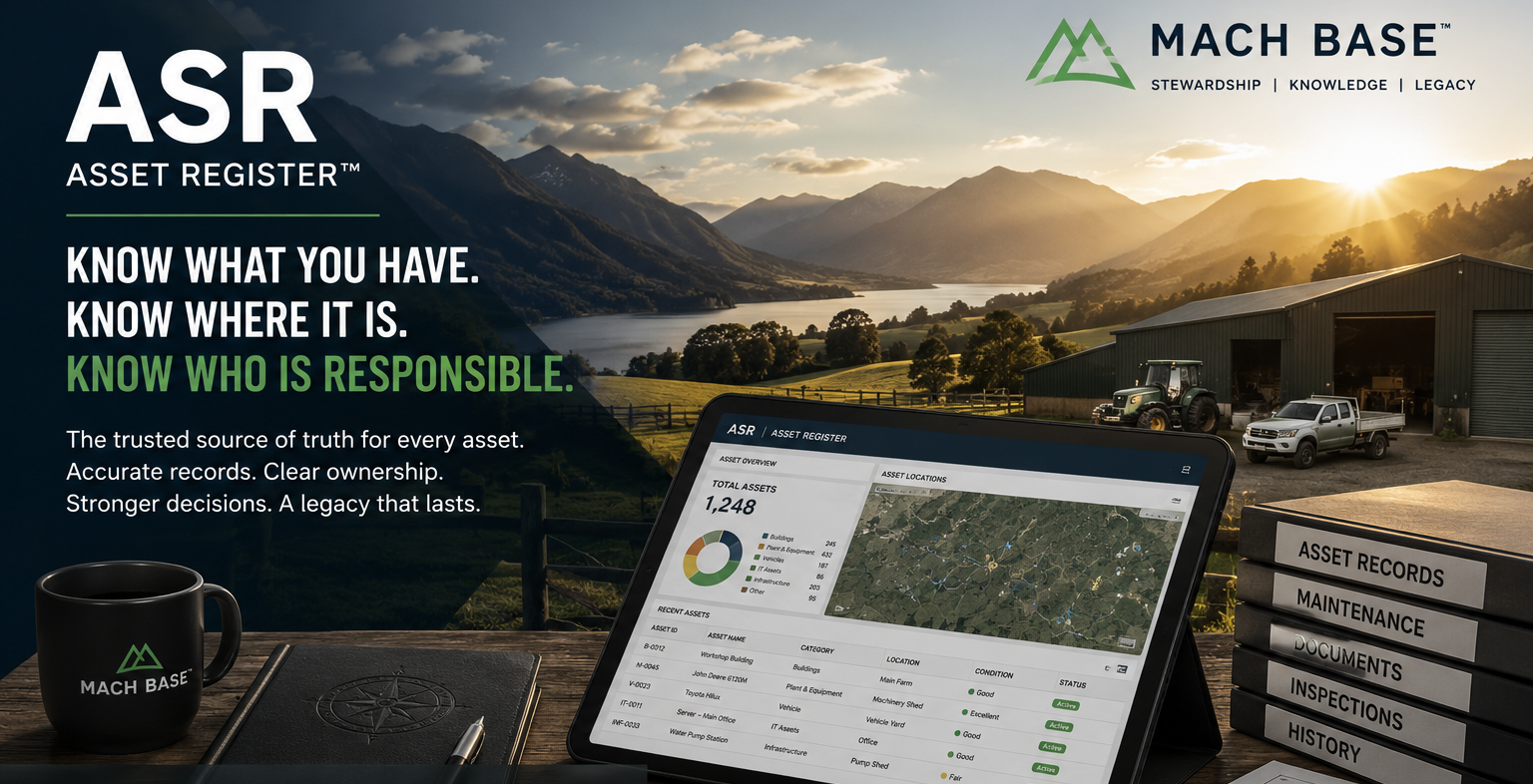
Asset Documents
Every asset has a story. Documents preserve that story.
An asset record becomes significantly more valuable when supported by the documents that explain its ownership, operation, maintenance and history. Asset Register™ provides a structured way to connect these documents directly to each asset.
Instead of storing information across filing cabinets, shared drives and email folders, supporting documentation becomes part of the asset’s permanent record.
Supporting The Asset Record
Documents provide the evidence behind every asset record. They verify ownership, support maintenance, demonstrate compliance and preserve organisational knowledge.
Linking documents directly to an asset reduces duplication, improves accessibility and ensures important information is never separated from the asset it relates to.
Ownership
Purchase invoices, contracts, deeds, certificates of ownership, registration papers and insurance documentation.
Operations
Operating manuals, user guides, procedures, training material and manufacturer specifications.
History
Maintenance records, inspections, modifications, correspondence, historical notes and photographs.
One Asset — One Document Library
Every asset becomes the centre of its own document collection.
Rather than searching through multiple folders or systems, users access manuals, warranties, certificates, photographs and reports directly from the asset record itself.
This approach improves efficiency while reducing the risk of lost or duplicated information.
Common Document Types
Digital Documents
PDFs, spreadsheets, photographs, videos, emails and cloud-based records can all be linked to an asset record.
Physical Documents
Original paper records may remain safely stored while their location and digital copies are referenced within the register.
Preserving Organisational Knowledge
Documents often contain information that cannot be replaced if lost. Recording where these documents are stored protects valuable organisational knowledge for future custodians.
As years pass, the document library becomes an important historical resource supporting governance, maintenance and informed decision-making.
Evidence Builds Confidence
Good records describe an asset. Good documents prove and explain it.
Together they provide confidence that decisions are based upon complete, reliable and verifiable information.
Knowing Where Assets Are
Once assets and their supporting documents have been recorded, the next step is accurately recording their physical or digital location.
Next: Asset Locations →