From Website To Platform
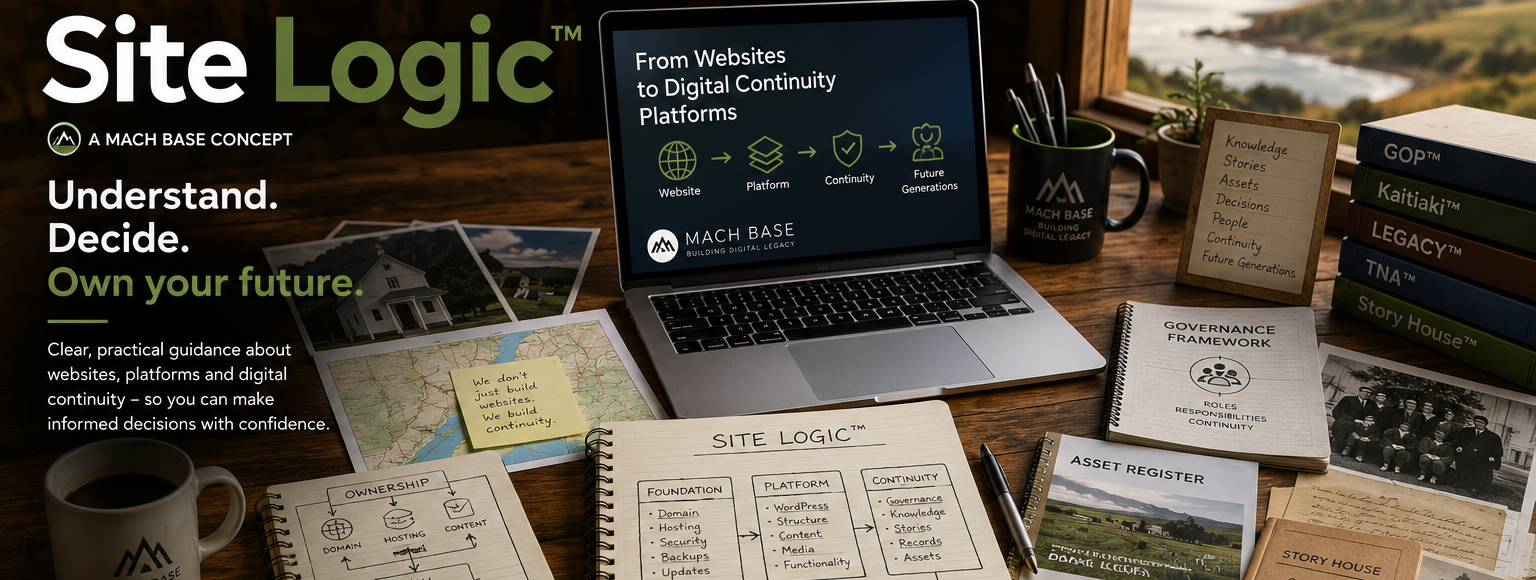
A traditional website provides information.
A platform helps people work, communicate, preserve knowledge and manage resources.
The right solution depends on the organisation, its objectives and the capability available to support it.
Traditional Website
Public information, contact details, photographs, documents and announcements.
Working Platform
Registers, archives, governance resources, member information, workflows, forms and knowledge libraries.
Capability Areas
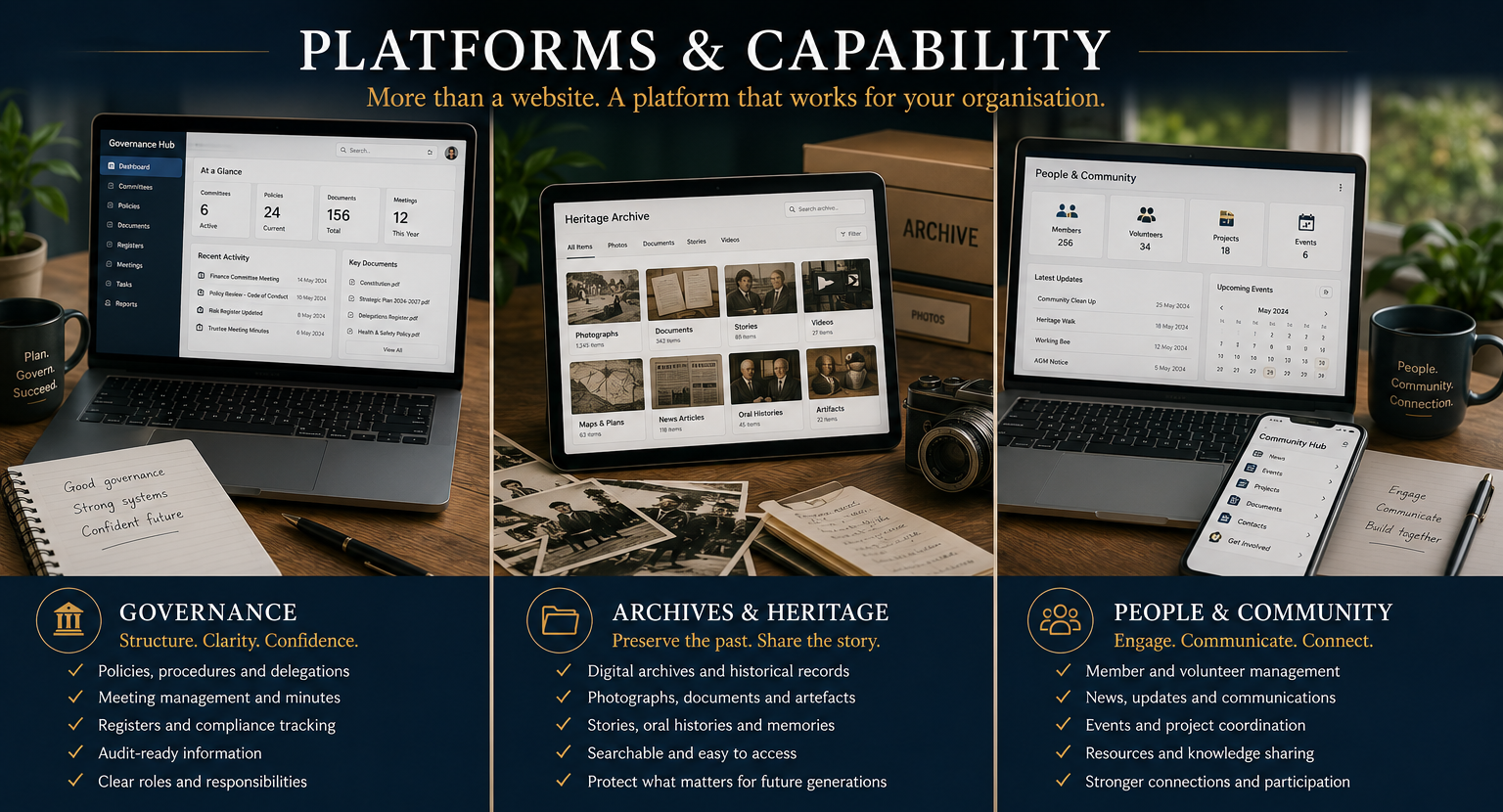
Every organisation is different, but most digital platforms draw from a similar collection of capability areas.
Information
Store and organise information so it can be found, understood and maintained over time.
Communication
Share information with members, stakeholders, trustees, staff and future generations.
Continuity
Preserve knowledge and capability so important information does not disappear when people leave.

MACH BASE Examples
MACH BASE™ modules demonstrate how different organisations may choose to use website technology.
The Capability Question
Not every organisation needs every feature.
The goal is not to build the largest platform possible. The goal is to build the most useful platform for the organisation’s needs, resources and objectives.
Simplicity often outperforms complexity.
Overbuilt
Too many features, too much complexity and insufficient capability to maintain the system.
Fit For Purpose
Appropriate functionality, manageable complexity and a clear path for future development.
Capability Should Grow Over Time
Many successful platforms begin with a small number of pages and gradually expand as confidence, knowledge and organisational needs develop.
Growth should be deliberate, practical and sustainable.
Understanding The Risks
Before making decisions, it is useful to understand the common mistakes organisations encounter.
Explore Common Pitfalls