ASSET LOGIC™
Physical Assets
The assets we can see, touch, maintain and pass forward.
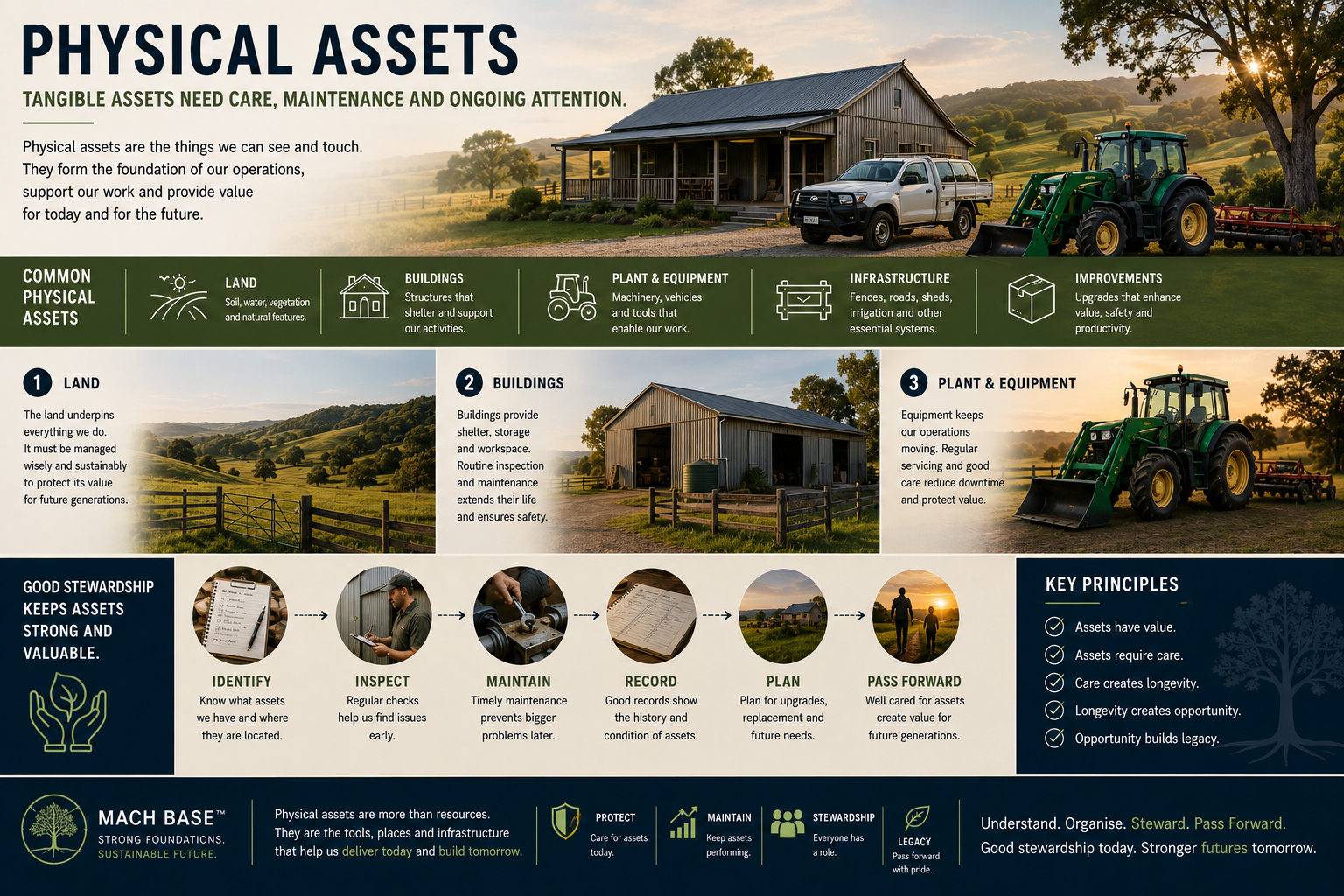
Physical assets often form the foundation upon which organisations, businesses, trusts and communities operate.
Land, buildings, machinery, equipment and infrastructure support daily activities while providing long-term capability and value.
Effective stewardship begins with understanding what exists, its condition and its role within the wider organisation.
What Are Physical Assets?
Physical assets are tangible resources that support operational, cultural, financial or community objectives.
Some generate income. Others provide services, preserve heritage or support future development.
Regardless of purpose, physical assets require care, documentation and ongoing stewardship.
Land
Buildings
Machinery
Vehicles
Infrastructure
Equipment
Facilities
Environmental Assets
Physical Assets Support Capability
Assets are more than objects.
A workshop supports production. A building supports community activity. Machinery supports operations. Land supports future opportunity.
Understanding the capability an asset provides is often as important as understanding its value.
Purpose
Why does this asset exist and what does it support?
Condition
Is the asset being maintained and monitored appropriately?
Continuity
How will future custodians understand and manage it?
Land & Property
Land is often one of the most significant assets an organisation or family will ever steward.
Ownership records, boundaries, usage rights, environmental considerations and future planning all contribute to effective stewardship.
Property often carries historical, cultural and emotional significance alongside financial value.
Buildings & Infrastructure
Buildings support people, operations and communities.
Maintenance schedules, inspections, compliance requirements and asset records help ensure buildings remain safe, functional and sustainable.
Infrastructure often represents long-term investment and requires careful planning.
Machinery & Equipment
Machinery and equipment often support specialised operations and productivity.
Registers, maintenance histories, inspections and replacement planning help maximise asset life and reduce risk.
Knowledge of operation and maintenance should also be documented and shared.
The Maintenance Principle
Every physical asset gradually changes over time.
Regular maintenance is often less expensive than delayed repair or replacement.
Effective stewardship recognises this reality and plans accordingly.
Reactive Approach
Wait until something fails before taking action.
Planned Approach
Monitor, maintain and review assets before problems emerge.
Environmental Assets
Natural environments are increasingly recognised as important assets.
Forests, waterways, wetlands, biodiversity projects and conservation areas provide long-term benefits that extend beyond financial measures.
Stewardship of these assets often reflects a commitment to future generations.
Recording Physical Assets
Physical assets should be supported by clear and accessible records.
Location
Ownership
Condition
Maintenance History
Photographs
Replacement Planning
Usage Information
Supporting Documents
Physical Assets & Future Generations
Physical assets often outlive the people currently responsible for them.
Good records, clear stewardship and long-term planning help ensure future custodians can continue the work that has already begun.
The MACH BASE Perspective
Physical assets are not simply items to be owned.
They represent responsibility, capability and opportunity.
Effective stewardship ensures these assets remain useful, understood and sustainable for those who follow.
Digital Assets
Increasingly, some of the most important assets an organisation owns cannot be physically touched.
Explore Digital Assets