
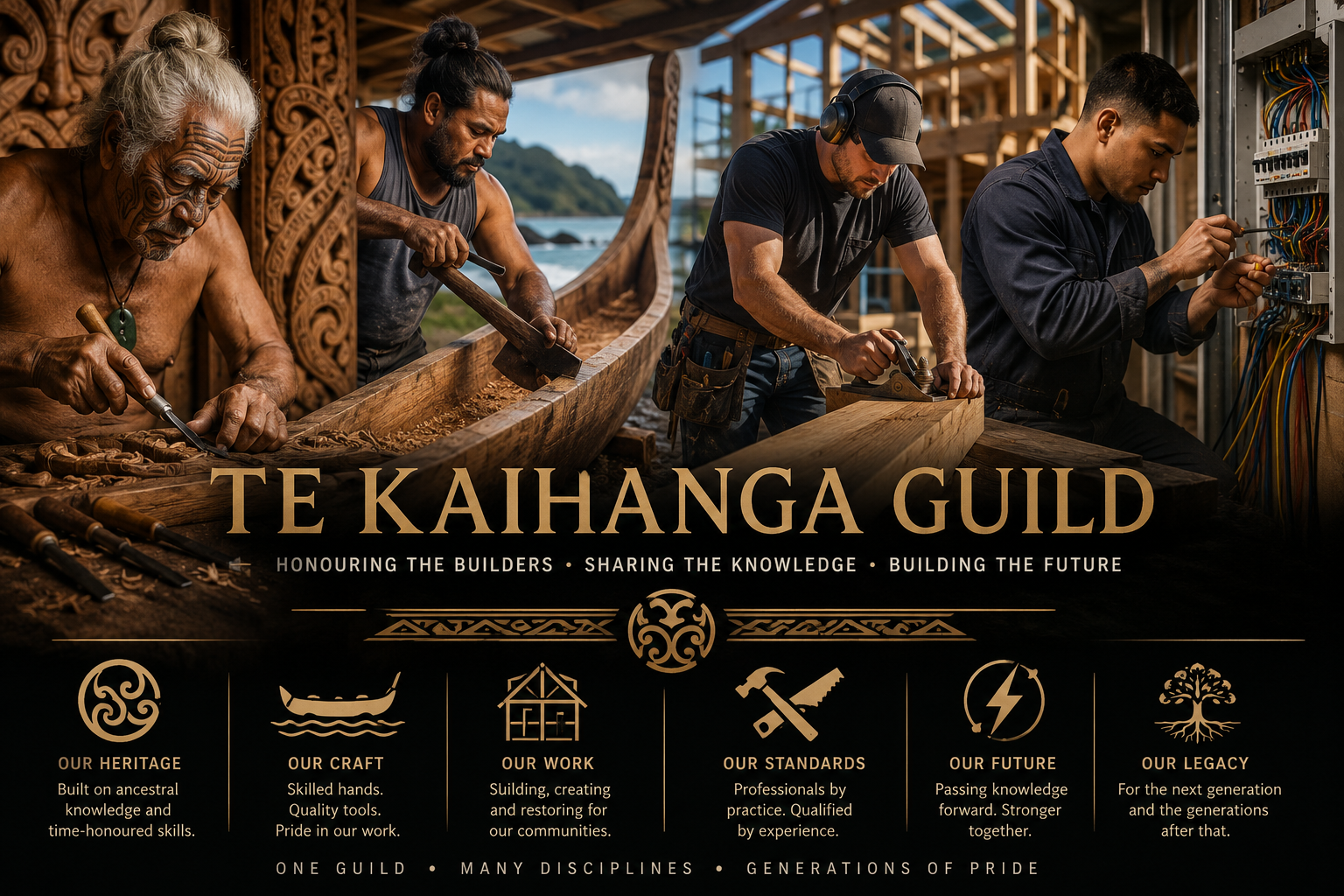
Honouring The Builders • Sharing The Knowledge • Building The Future
Te Kaihanga Guild
A demonstration guild for builders, makers, tradespeople, restorers and knowledge holders.
Te Kaihanga Guild exists to honour the people who build, repair, teach, create and pass practical knowledge forward across generations.
The Meaning Of Kaihanga
Kaihanga — The Builder, Creator, Maker
The Māori word Kaihanga is commonly translated as builder, creator, maker or constructor. It refers to a person who brings something into existence through skill, effort, knowledge and experience.
A Kaihanga may build a house, carve a waka, cultivate land, repair machinery, create works of art, teach practical skills or develop new systems and ideas.
The word extends beyond physical construction. It recognises those who build communities, preserve knowledge, solve problems and contribute to the wellbeing of future generations.
How Kaihanga Relates To The Guild Tradition
Throughout history, guilds brought together people who shared knowledge, upheld standards and trained those who would follow after them.
In much the same way, Māori communities have long passed practical knowledge through whānau, hapū, iwi, tohunga, skilled practitioners and experienced elders.
The structures may differ. The principle remains the same.
Knowledge has value. Skills should be shared. Experience should be respected. Future generations should inherit more than tools alone.
Te Kaihanga Guild brings these traditions together by recognising builders, makers, craftspeople, tradespeople, innovators and knowledge holders from all walks of life.
A Kaihanga builds for today while preserving knowledge for tomorrow.
What Is A Guild?
The word Guild originates from medieval Europe, where groups of skilled tradespeople organised themselves into communities dedicated to learning, craftsmanship, quality and mutual support.
Carpenters, stonemasons, blacksmiths, shipbuilders, weavers and other skilled workers formed guilds to preserve standards, share knowledge and train future generations.
A guild was more than a professional association. It was a community of practice. Knowledge was protected, skills were taught and apprentices were guided by experienced masters who had dedicated their lives to the craft.
The Guild Tradition
The Names Differ. The Principle Remains.
Across many cultures, similar systems existed long before the modern education system.
Knowledge was passed from elders to youth, masters to apprentices, parents to children, tohunga to tauira, and builders to future builders.
Communities recognised that practical knowledge had value and that responsibility existed to pass it forward.
Te Kaihanga Guild In A Modern Context
Te Kaihanga Guild draws inspiration from both traditional guild systems and indigenous knowledge-sharing traditions.
The objective is not to replace formal qualifications. The objective is to complement them.
Qualifications demonstrate what a person has studied. Experience demonstrates what a person has learned. A healthy community needs both.
Heritage
Respect the knowledge handed down by previous generations.
Craftsmanship
Take pride in doing the job properly, safely and with care.
Continuity
Ensure future builders inherit more than tools alone.
Many Disciplines. One Guild.
The Guild recognises that valuable knowledge exists in many places.
Why The Guild Matters Today
Modern Societies Often Preserve Qualifications But Lose Experience.
When a skilled tradesperson retires, decades of practical knowledge can disappear.
When an elder passes away, stories, techniques and lessons may be lost forever.
Te Kaihanga Guild demonstrates how knowledge can be documented, shared and preserved so future generations inherit more than certificates.
A Guild In One Sentence
A Guild is a community of builders, makers and knowledge holders committed to preserving skills, supporting one another and passing valuable experience to future generations.
What This Site Demonstrates
Kaitiaki OS In Action
The Trade Changes. The Framework Remains.
Te Kaihanga Guild demonstrates how Kaitiaki OS can support knowledge preservation, project management, mentorship, stewardship and continuity.
The trade may change. The tools may change. The technology may change. The need to pass knowledge forward remains the same.
One Guild • Many Disciplines • Generations Of Pride
The greatest asset of any guild is not its buildings, tools or projects. It is its people.
Enter The Guild