
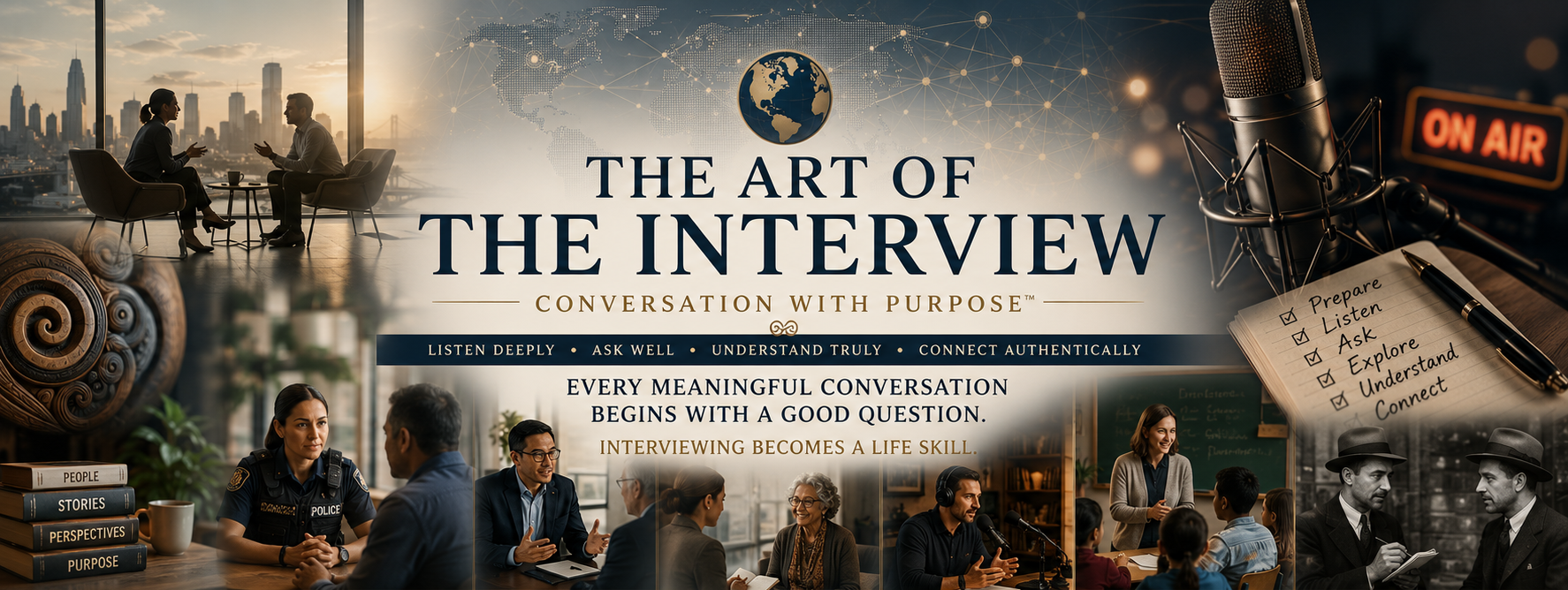
Understanding Through Conversation
A practical framework for asking, listening and responding with purpose.
The Art of the Interview is a practical learning suite built around one simple idea: better conversations lead to better understanding.
Interviewing is often treated as a specialist skill belonging only to journalists, police officers, recruiters or researchers. In reality, it is used every day wherever people seek information, assess experience, preserve stories, make decisions or understand another person’s point of view.
Universal
The principles of good interviewing apply across professions, cultures and settings. The language may change, but preparation, trust, listening and purposeful questioning remain central.
Practical
This suite focuses on usable methods rather than abstract theory alone. Each page is designed to help people prepare, communicate and respond more effectively in real situations.
Human
Every interview involves people, pressure, memory, emotion and context. Good technique matters, but so do patience, judgement, respect and the ability to build genuine connection.
Why This Suite Exists
Poor interviews often fail before the first question is asked. The interviewer may arrive without enough research, without a clear purpose or without understanding the person in front of them.
At the same time, interviewees are frequently expected to perform well without being shown how to prepare, structure their answers or communicate under pressure.
The Art of the Interview addresses both sides. It helps interviewers create stronger conversations and helps interviewees present themselves with clarity, confidence and authenticity.
For the Person Asking
Research, structure and active listening
Interviewers carry responsibility for the quality of the exchange. They must understand the purpose, prepare the ground, ask relevant questions, recognise important detail and know when to follow an unexpected path.
For the Person Answering
Preparation, composure and clear expression
Interviewees benefit from understanding the setting, anticipating likely questions and learning how to present experience without becoming vague, defensive, over-rehearsed or overwhelmed.
Applications Across Everyday Life
Interviewing can be formal or informal, structured or conversational. It may occur across a desk, in a studio, on a job site, inside a family home or during a walk through someone’s memories.
Method With Personality
Formal interview methods provide structure. Experience then adds judgement, timing, confidence and personal style.
Strong interviewers rarely sound mechanical. They use method beneath the surface while remaining natural, responsive and fully present. Their skill is not in displaying technique, but in creating the conditions where useful information and honest expression can emerge.
What This Suite Covers
The pages within The Art of the Interview move from first principles into practical application. Together they form a broad but connected framework for understanding how interviews work.
Good Interviewing Begins Before the Conversation
Explore the foundations that support meaningful preparation, purposeful questioning, attentive listening and reliable understanding.
Continue to Foundations