
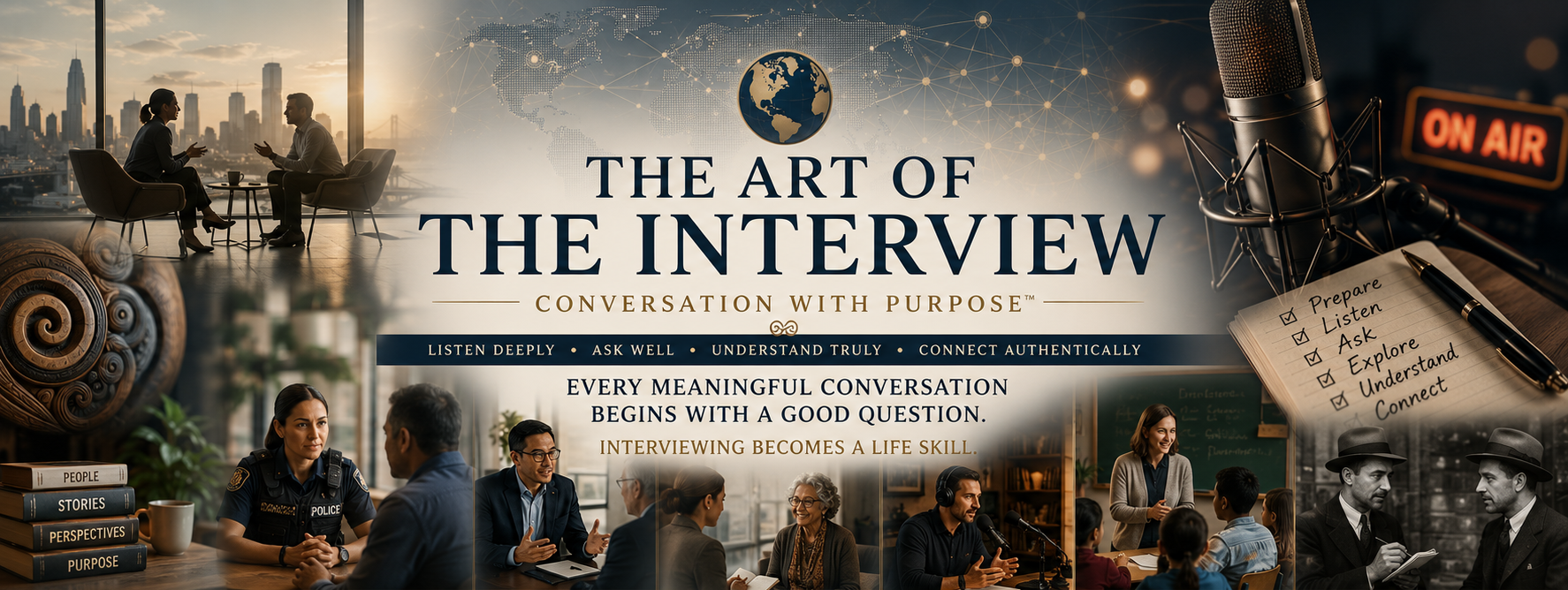
The Foundations of Every Great Interview
Preparation • Purpose • Presence • Trust
Successful interviews are built long before the first question is asked. Whether interviewing for employment, investigating an incident, recording history, hosting a podcast or meeting a client, the same core principles consistently appear beneath every meaningful conversation.
These foundations form the framework for every page that follows within The Art of the Interview.
Know Your Purpose
Every interview should begin with a clear objective. Are you gathering facts? Understanding a person’s experience? Assessing suitability? Recording history? Building trust? The purpose determines the structure, tone and direction of every question.
Know Your Subject
Preparation demonstrates professionalism and respect. Research the individual, organisation or topic before arriving. The better prepared you are, the more naturally meaningful questions emerge.
Preparation
Preparation reduces uncertainty for everyone involved. It creates confidence, improves question quality and allows the interviewer to focus on listening instead of thinking about what to ask next.
Presence
Be fully engaged. Good interviewers avoid distractions, remain patient and allow conversations to develop naturally without rushing toward predetermined conclusions.
Professionalism
Courtesy, punctuality, honesty and respectful communication establish the environment in which useful conversations become possible. Professionalism creates credibility.
Trust Is Earned
People rarely share meaningful information simply because they are asked. Trust develops when they believe they are being listened to fairly, treated respectfully and understood accurately.
Building rapport is not manipulation. It is the process of creating an environment where honest communication feels safe and worthwhile.
Curiosity
Ask to Understand
Curiosity drives good interviewing. Questions should seek understanding rather than confirmation of assumptions. Curiosity keeps conversations open and allows unexpected insights to emerge.
Observation
Listen Beyond Words
Interviewers observe tone, pacing, confidence, hesitation, emotion and consistency. Listening includes both what is spoken and what remains unsaid.
The Seven Foundations
One Conversation at a Time
Outstanding interviewers are rarely the fastest talkers. They are usually the best listeners. They create space for others to think, explain and reflect while guiding the conversation with calm purpose.
Technique matters. Experience matters. But every effective interview ultimately rests upon the quality of the human connection established between two people.
Strong Foundations Create Better Conversations
The next step is understanding the responsibilities and mindset of the person asking the questions.
Continue to The Interviewer