
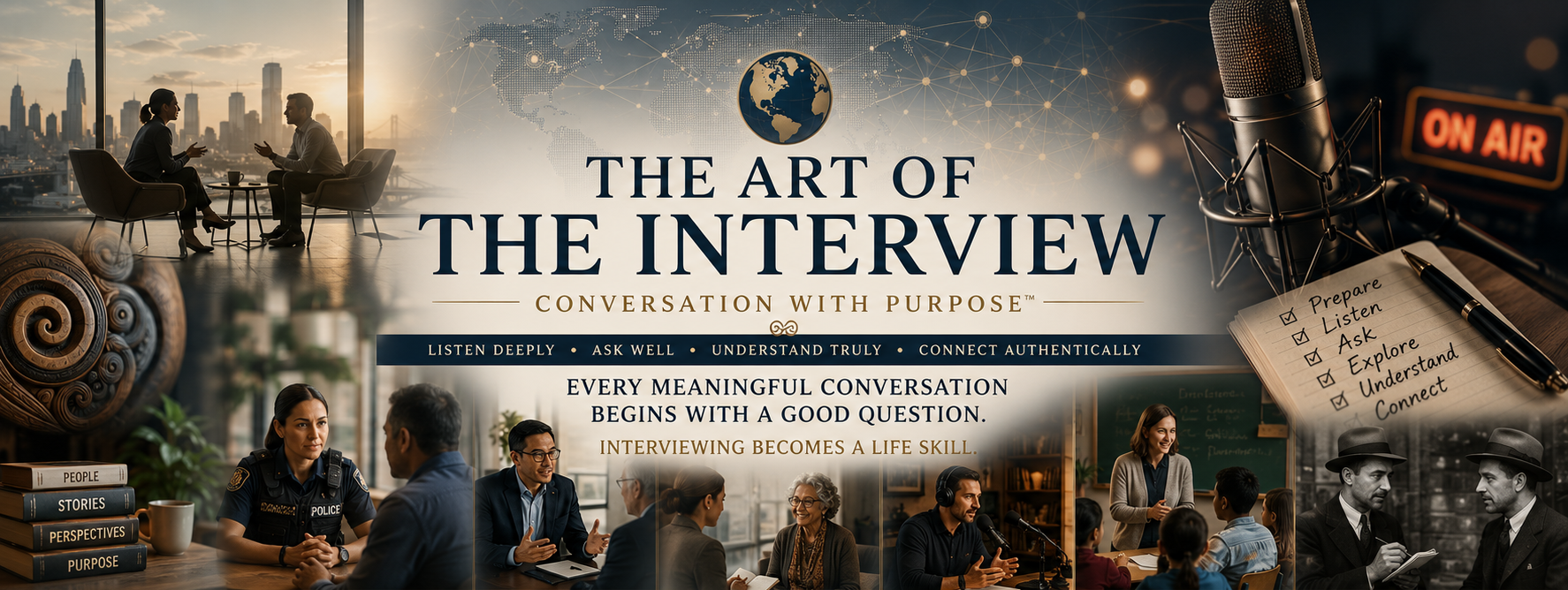
Learning From Real Conversations
Experience transforms theory into practical judgement.
Every interview is unique, yet common patterns emerge across professions, cultures and situations. Case studies allow us to examine real interview scenarios, identify what worked well, recognise missed opportunities and understand how good judgement develops through experience.
The examples presented throughout this suite are educational rather than prescriptive. They demonstrate principles that can be adapted to many different interview settings.
Real Situations
Case studies are drawn from practical environments including business, employment, media, investigations, education and everyday life. Each example focuses on communication rather than personalities.
Practical Lessons
Every interview offers opportunities to reflect upon preparation, question design, listening, observation and professional judgement. Learning often occurs after the conversation has ended.
Professional Growth
Strong interviewers continually review their own performance. Reflection strengthens future interviews and gradually develops confidence, adaptability and personal interviewing style.
Learning Without Blame
Every interviewer occasionally misses an opportunity, asks a poor question or wishes they had explored an answer more deeply. Professional growth comes from thoughtful reflection rather than criticism.
The purpose of these case studies is not to judge performance, but to recognise how effective interviewing develops through practice.
What Went Well?
Recognising Good Practice
Every successful interview contains strengths worth repeating. Understanding why something worked well is just as valuable as identifying mistakes.
What Could Improve?
Learning Through Reflection
Professional interviewers continually ask themselves: “What would I do differently next time?” Growth comes from honest evaluation and thoughtful adjustment.
Future Case Study Library
Reflective Practice
One of the most valuable habits an interviewer can develop is reviewing each conversation afterwards. Consider questions such as:
- Did I achieve the interview objective?
- Did I genuinely listen?
- Were my questions clear and purposeful?
- Did I interrupt unnecessarily?
- What surprised me?
- What would I change next time?
Reflection gradually transforms experience into wisdom.
Experience Becomes Judgement
Interviewing is not mastered by reading alone. Skill develops through preparation, practice, observation and thoughtful reflection across many conversations and many years.
Every interview becomes part of the interviewer’s continuing education.
Continue Building Your Interviewing Toolkit
Explore recommended books, articles, videos, templates and practical resources that support lifelong learning.
Continue to Resources