
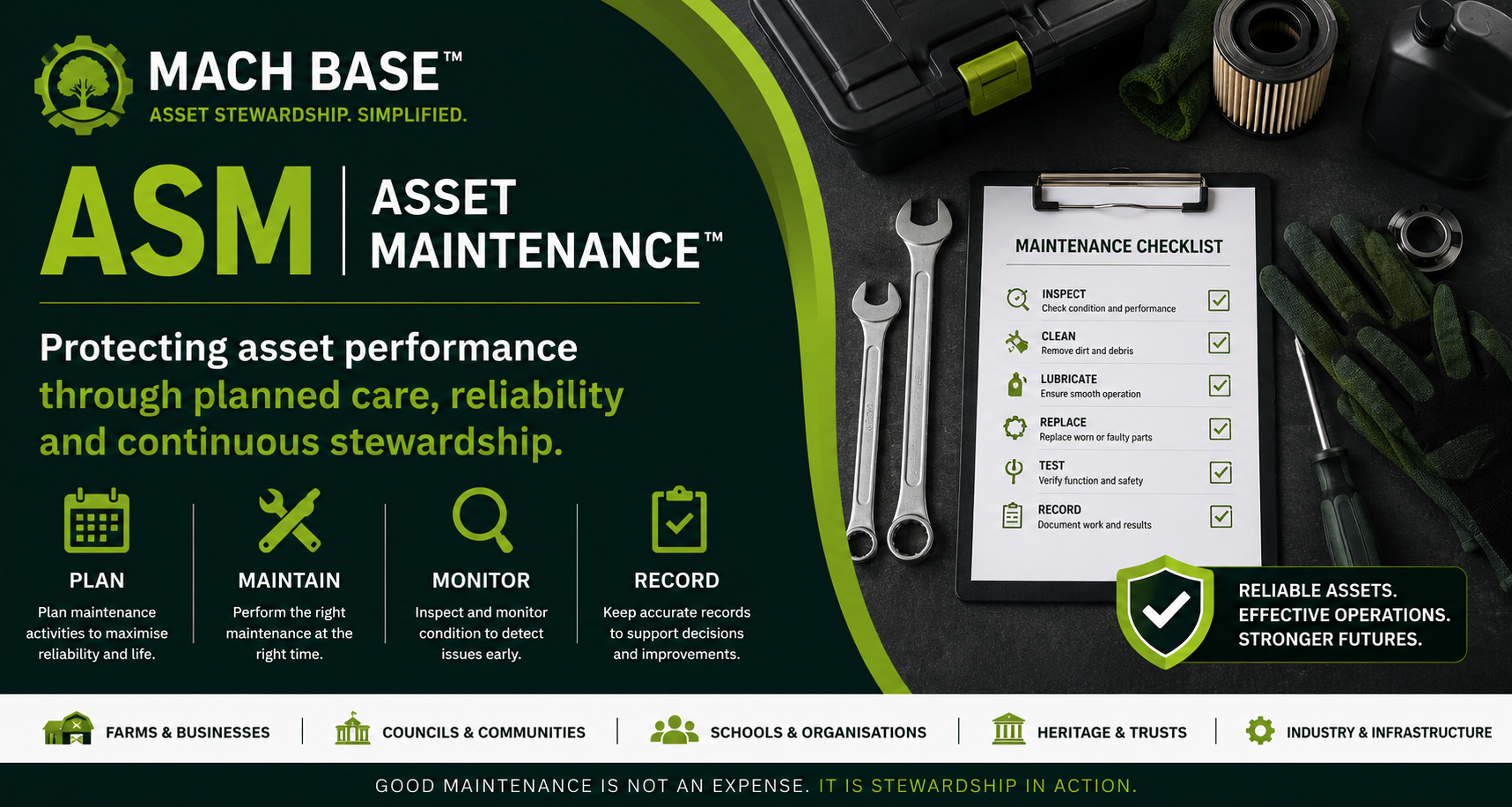
Inspections & Condition Monitoring
Understanding asset condition before small issues become major failures.
Regular inspections and condition monitoring provide organisations with valuable information about the health, safety and operational readiness of their assets. Rather than relying on assumptions, maintenance decisions are based upon observed evidence and measurable condition.
Condition monitoring allows maintenance activities to be prioritised according to actual asset performance, helping organisations reduce risk while improving reliability.
Seeing Problems Early
Most asset failures develop gradually. Routine inspections help identify wear, corrosion, damage, contamination, vibration, overheating and other early warning signs before operational performance is affected.
Early detection allows organisations to schedule maintenance proactively, avoiding unnecessary downtime and costly emergency repairs.
Inspect
Carry out structured visual inspections to identify changes in asset condition and operational readiness.
Monitor
Observe asset performance through routine measurements, testing and condition monitoring techniques.
Respond
Use inspection findings to plan maintenance activities before problems affect safety or operational performance.
Condition Guides Maintenance
Condition monitoring allows maintenance to be based on evidence rather than guesswork.
Instead of replacing components simply because time has passed, organisations can make informed decisions using inspection results, operational history and asset performance.
This approach improves reliability while reducing unnecessary maintenance costs.
Typical Inspection Activities
Routine Inspections
Simple, regular inspections performed by operational staff often identify developing issues before specialist maintenance becomes necessary.
Specialist Assessments
Critical assets may require detailed inspections using specialised equipment, testing procedures or technical expertise.
Supporting Better Decisions
Inspection findings provide valuable information for maintenance planning, budgeting, lifecycle forecasting and operational risk management.
Reliable condition information enables organisations to prioritise maintenance activities where they will deliver the greatest benefit.
Knowledge Builds Reliability
Every inspection contributes to a growing understanding of asset condition and performance.
Over time, this knowledge improves maintenance planning, strengthens operational confidence and supports better stewardship of organisational assets.
Maintenance Records
Inspection findings become even more valuable when they are accurately recorded, preserved and available for future decision-making.
Next: Maintenance Records →