Mō Te Kaupapa
He kaupapa ora hei kohikohi, hei tiaki, hei tuku hoki i ngā kōrero o Rangiwaea
I whakatūria Te Kaupapa Hītori Ora o Rangiwaea hei wāhi e kohia ai, e tiakina ai, e whakaaturia ai ngā kōrero, ngā reo, ngā whakaahua, ngā maharatanga me ngā taonga tuku iho o Rangiwaea.
Ehara tēnei kaupapa i te whakamārama kotahi mō te hītori o te moutere. He wāhi kē tēnei mō ngā reo maha, ngā tirohanga maha, me ngā wheako o ngā whānau i noho, i mahi, i tipu, i hoki mai rānei ki Rangiwaea.
Te Pūtake o Te Kaupapa
He nui ngā kōrero tuku iho e noho tonu ana i roto i ngā mahara o te tangata. Kāore anō kia tuhia, kāore anō kia hopukina, ā, i ētahi wā, kāore anō kia kōrerotia ki ngā uri.
Ka ngaro haere ngā ingoa, ngā wāhi, ngā kōrero me ngā taipitopito iti i te paheketanga o te wā. Nā reira, ko te pūtake o tēnei kaupapa he whakakotahi i aua taonga i a rātou e taea tonutia ana te kohikohi.
Mā te hopu i ngā reo o nāianei, ka taea e ngā uri āpōpō te rongo tonu i ngā kōrero o nehe.
He Nui Ake i Ngā Rā me Ngā Ingoa
Ko te hītori ora ehara i te rārangi noa o ngā rā, ngā hui me ngā kaupapa nui. Kei roto hoki i ngā mahi o ia rā, i ngā kōrero pukuhohe, i ngā mahi pāmu, i te moana, i ngā hui whānau, i ngā tangihanga, i ngā tamariki me ngā kaumātua.
He taonga tonu te whakaahua o tētahi whare kua kore nei e tū. He taonga te reo o tētahi kuia e whakahua ana i ngā ingoa tawhito. He taonga anō hoki te kōrero mō tētahi kurī, tētahi poti, tētahi ara, tētahi pāmu rānei e maumaharatia tonutia ana.
Ngā Kōrero ā-Waha
Ka hopukina ngā reo, ngā uiui, ngā waiata, ngā whakahua ingoa me ngā kōrero a te hunga e mau tonu ana i ngā mātauranga.
Ngā Wheako Whaiaro
Ka whakanuia ngā maharatanga o te tangata, ahakoa he kōrero nui, he kōrero iti rānei, nō te mea mā aua kōrero ka kitea te oranga tūturu o te kāinga.
Ngā Whakaahua me Ngā Tuhinga
Ka kohia ngā whakaahua, ngā reta, ngā mahere, ngā pānui, ngā tuhinga me ētahi atu taonga e tautoko ana i ngā kōrero.
Ngā Wāhi me Ngā Ingoa
Ka herea ngā kōrero ki ngā wāhi o te moutere — ngā kāinga, ngā takutai, ngā tauranga, ngā pāmu, ngā urupā me ngā ara tawhito.
Ngā Whānau me Ngā Tūpuna
Ka whakanuia ngā whānau, ngā kaimahi, ngā kaiārahi, ngā kiripuaki me te hunga i whai wāhi ki te oranga o Rangiwaea.
Ngā Whakatupuranga E Haere Mai Ana
Ka tiakina ngā kōrero i runga i te whakaaro ehara nō tātou anake, engari nō ngā uri ka whai mai.
Ngā Mātāpono o Te Kaupapa
Ka ārahina Te Kaupapa Hītori Ora o Rangiwaea e ngā mātāpono o te manaaki, te whakaute, te tika, te whakaae me te kaitiakitanga.
He Kōrero Maha, He Tirohanga Maha
Ka rerekē pea ngā maharatanga o ngā tāngata e pā ana ki te kaupapa kotahi. Ehara tēnā i te raruraru. Koia tonu te āhua o te hītori ora.
Ka taea te pupuri tahi i ngā tirohanga rerekē, me te whakaatu mārama ko wai te kaikōrero, nō hea te kōrero, ā, he aha ngā taunakitanga e tautoko ana i taua kōrero.
Kāore te kaupapa nei e whai ki te whakatau i ngā kōrero katoa hei putanga kotahi. Ko tāna kē, he manaaki i ngā reo me ngā maharatanga kia kore ai e ngaro.
He Kaupapa Tupu Tonu
Kāore he rā e kīia ai kua oti katoa tēnei kaupapa. Ka tipu tonu i ia kōrero hou, i ia whakaahua ka kitea, i ia ingoa ka tautuhia, i ia whakatikatika ka tukuna mai.
Ka taea hoki e ngā upoko hou te whanake ā muri ake nei, tae atu ki ngā rauemi mātauranga, ngā kohinga whānau, ngā mahere kōrero, ngā whakaaturanga me ngā pūranga matihiko.
Whai Wāhi Mai ki Te Kaupapa
Mā te katoa tēnei taonga e whakatipu. Tukuna mai he kōrero, he whakaahua, he ingoa, he whakatikatika, he whakaaro rānei mō ngā wāhanga ka taea te whakawhanake.
Tukuna MaiAbout the Project
A living initiative to gather, protect and carry forward the history of Rangiwaea
The Rangiwaea Living History Project was established as a place to gather, care for and share the stories, voices, photographs, memories and inherited knowledge of Rangiwaea.
It is not intended to present one final or authoritative version of the island’s history. It provides a home for many voices, many perspectives and the experiences of whānau who have lived, worked, grown up or returned to Rangiwaea.
Why the Project Exists
Much of the history handed down through generations still lives within people’s memories. It may never have been written, formally recorded or shared with younger members of the whānau.
Names, locations, stories and small but important details can disappear as time passes. This project therefore seeks to bring those treasures together while they can still be remembered, identified and recorded.
By recording the voices of the present, future generations may continue to hear the stories of the past.
More Than Names and Dates
Living history is not simply a list of dates, meetings and major events. It is also found in everyday work, humorous stories, farming, life on the water, whānau gatherings, tangihanga, childhood and the wisdom of kaumātua.
A photograph of a house that no longer stands can be a treasure. So can the voice of a kuia pronouncing an old place name, or a memory of a dog, a boat, a pathway or a farm that remains vivid within the whānau.
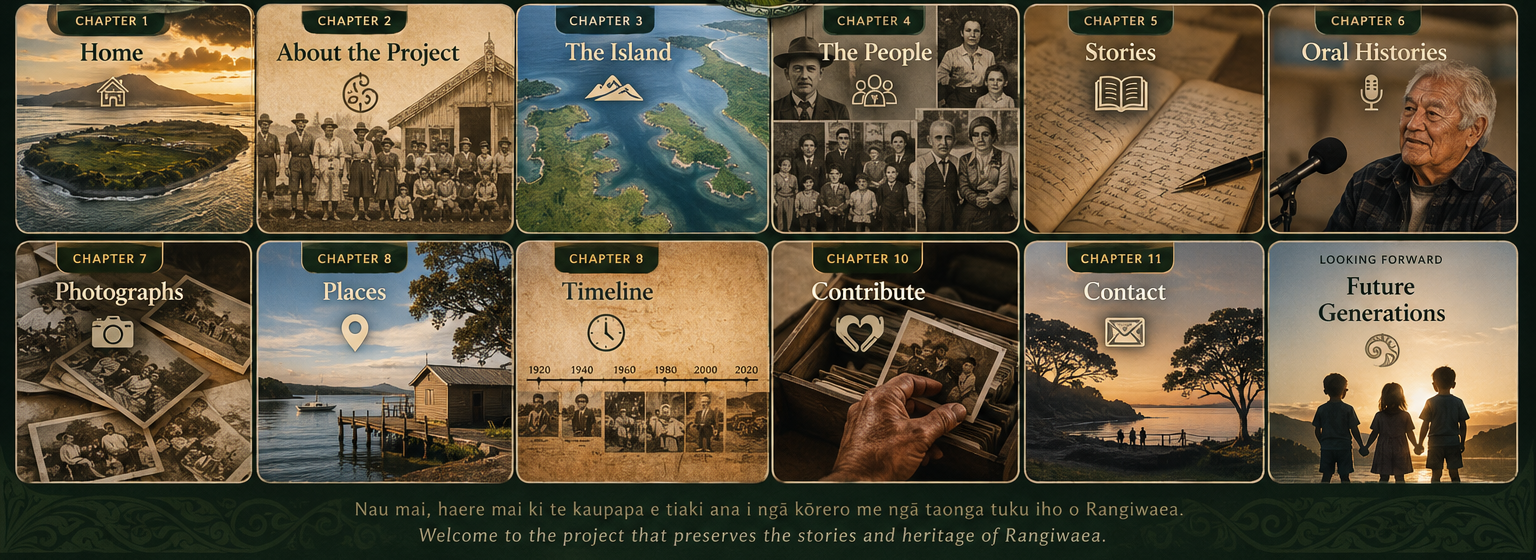
Oral Histories
Voices, interviews, waiata, names and personal accounts will be recorded from those who continue to carry knowledge of the island.
Personal Experiences
Individual memories are valued, whether they describe a major event or a small everyday moment, because together they reveal the true life of the community.
Photographs and Documents
Photographs, letters, maps, notices, records and other materials will be gathered to support and enrich the stories being shared.
Places and Names
Stories will be connected to the places of the island — homes, beaches, landing places, farms, urupā and old pathways.
Whānau and Ancestors
The project honours whānau, workers, leaders, characters and all those who have contributed to the life of Rangiwaea.
Future Generations
The collection is cared for with the understanding that these stories do not belong only to the present generation, but also to those still to come.
Guiding Principles
The Rangiwaea Living History Project is guided by care, respect, accuracy, permission and kaitiakitanga.
Many Voices, Many Perspectives
People may remember the same event differently. That is not necessarily a problem. It is part of the nature of living history.
Different perspectives can be preserved together, with clear information about who provided each account, where it came from and what supporting material may exist.
The project does not seek to force every memory into one final version. Its purpose is to care for those voices and recollections so they are not lost.
A Project That Will Continue to Grow
There will never be a day when every part of this project can be declared complete. It will continue to grow with every new story, photograph, identification, correction and contribution.
Further chapters may also develop over time, including educational resources, whānau collections, story maps, exhibitions and deeper digital archives.
Become Part of the Project
This taonga will grow through the participation of the people. Share a story, photograph, name, correction or idea for a collection that should be developed.
Contribute to the Project